
Products
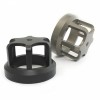
FINISHanodize And Paiting
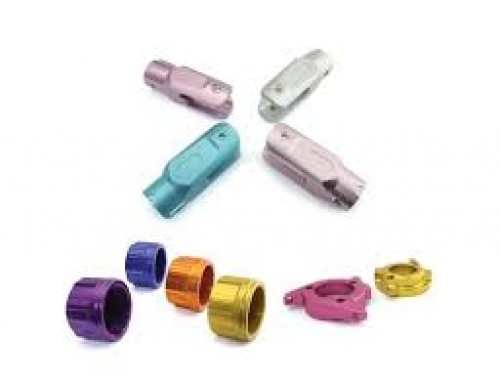
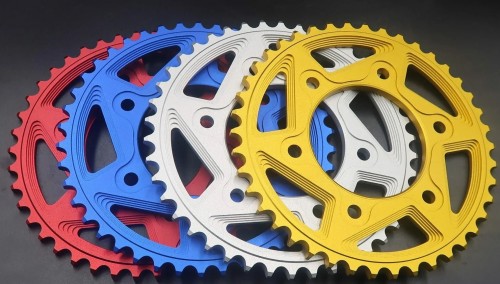
Anodizing is an electrolytic passivation process used to increase the thickness of the natural oxide layer on the surface of metal parts. The process is called anodizing because the part to be treated forms the anode electrode of an electrolytic cell. Anodizing increases resistance to corrosion and wear, and provides better adhesion for paint primers and glues than bare metal does. Anodic films can also be used for several cosmetic effects, either with thick porous coatings that can absorb dyes or with thin transparent coatings that add reflected light wave interference effects.
Description:
Details:
Anodizing is also used to prevent galling of threaded components and to make dielectric films for electrolytic capacitors. Anodic films are most commonly applied to protect aluminium alloys, although processes also exist for titanium, zinc, magnesium, niobium, zirconium, hafnium, and tantalum. Iron or carbon steel metal exfoliates when oxidized under neutral or alkaline micro-electrolytic conditions; i.e., the iron oxide (actually ferric hydroxide or hydrated iron oxide, also known as rust) forms by anoxic anodic pits and large cathodic surface, these pits concentrate anions such as sulfate and chloride accelerating the underlying metal to corrosion. Carbon flakes or nodules in iron or steel with high carbon content (high-carbon steel, cast iron) may cause an electrolytic potential and interfere with coating or plating. Ferrous metals are commonly anodized electrolytically in nitric acid or by treatment with red fuming nitric acid to form hard black Iron(II,III) oxide. This oxide remains conformal even when plated on wiring and the wiring is bent.
Anodizing changes the microscopic texture of the surface and the crystal structure of the metal near the surface. Thick coatings are normally porous, so a sealing process is often needed to achieve corrosion resistance. Anodized aluminium surfaces, for example, are harder than aluminium but have low to moderate wear resistance that can be improved with increasing thickness or by applying suitable sealing substances. Anodic films are generally much stronger and more adherent than most types of paint and metal plating, but also more brittle. This makes them less likely to crack and peel from ageing and wear, but more susceptible to cracking from thermal stress.
Aluminium Alloy
Series 1xxx: 1050, 1060, 1070, 1080, 1100, 1435 other(are essentially pure aluminium with a minimum 99% aluminium content by weight)
Series 2xxx: 2011, 2014, 2017, 2024 other (are alloyed with copper, can be precipitation hardened to strengths comparable to steel. Formerly referred to as duralumin, they were once the most common aerospace alloys, but were susceptible to stress corrosion cracking and are increasingly replaced by 7000 series in new designs.)
Series 3xxx: 3002, 3003, 3003, 3104, 3204, 3030 other(are alloyed with manganese)
Series 5xxx: 5005, 5025, 5040, 5056, 5083 other(Very good resistance to corrosion and oxidation. For parts with a good mechanical strenght and improved fatigue resistance.)
Series 6xxx: 6101, 6003, 6061, 6063, 6020, 6201, 6262, 6082 other(For machinery components, structural elements. It offers resistance levels higher than the 5xxx series alloys and has a good resistance to corrosion.)
Series 7xxx: 7003, 7005, 7050, 7075 other(Aeronautical alloy: gears and shafts, bicycle and motorbike frames, sprockets, aerospace implementation, nautical engines, moulds, others)